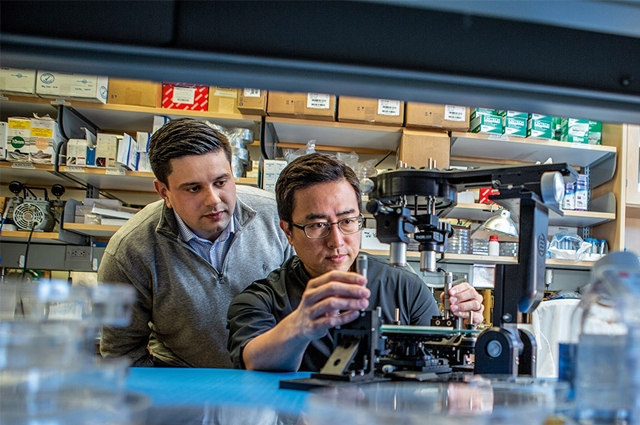
فرآیند رعد و برق رعد و برق آمونیاک را از هوا ایجاد می کند. این رویکرد می تواند از راه حل های آینده انرژی سبز پشتیبانی کند.
محققان در[{” attribute=”” tabindex=”0″ role=”link”>University of Sydney have used artificial lightning to create a more efficient technique for producing ammonia, a chemical essential to modern life. Ammonia plays a key role in fertilizers that contribute to nearly half of global food production.
The team developed a simplified process to produce ammonia (NH₃) directly in its gaseous form. In contrast, earlier methods developed by other labs yielded ammonium (NH₄⁺) in solution, which demands additional energy and conversion steps to obtain usable ammonia gas.
Traditionally, ammonia is produced using the Haber-Bosch process, a method with a substantial environmental impact due to its high carbon emissions. This approach also requires large-scale infrastructure and proximity to inexpensive natural gas sources to remain economically viable.
The chemical process that fed the world, and the Sydney team looking to revolutionize it
Ammonia was once so highly valued—primarily in the form of bird droppings—that it became a source of conflict.
The development of the Haber-Bosch process in the 19th century enabled the large-scale production of synthetic ammonia, transforming both agriculture and industry. Today, approximately 90 percent of the world’s ammonia is still produced using this method.
“Industry’s appetite for ammonia is only growing. For the past decade, the global scientific community, including our lab, wants to uncover a more sustainable way to produce ammonia that doesn’t rely on fossil fuels.
“Currently, generating ammonia requires centralized production and long-distance transportation of the product. We need a low-cost, decentralized and scalable ‘green ammonia’,” said lead researcher Professor PJ Cullen from the University of Sydney’s School of Chemical and Biomolecular Engineering and the Net Zero Institute. His team has been working on ‘green ammonia’ production for six years.
“In this research, we’ve successfully developed a method that allows air to be converted to ammonia in its gaseous form using electricity. A huge step towards our goals.”
The research was published in Angewandte Chemie.
Ammonia is composed of three hydrogen atoms, making it a promising carrier and source of hydrogen for energy applications. It also offers potential for storing and transporting hydrogen, as the hydrogen can be extracted by a process known as “cracking,” which separates the molecules.
Because of its chemical properties, ammonia is being explored as a carbon-free fuel alternative. This has drawn attention from the shipping sector, which contributes roughly 3 percent of global greenhouse gas emissions.
Cracking a chemical conundrum
Professor Cullen’s team’s new method to generate ammonia works by harnessing the power of plasma, by electrifying or exciting the air.
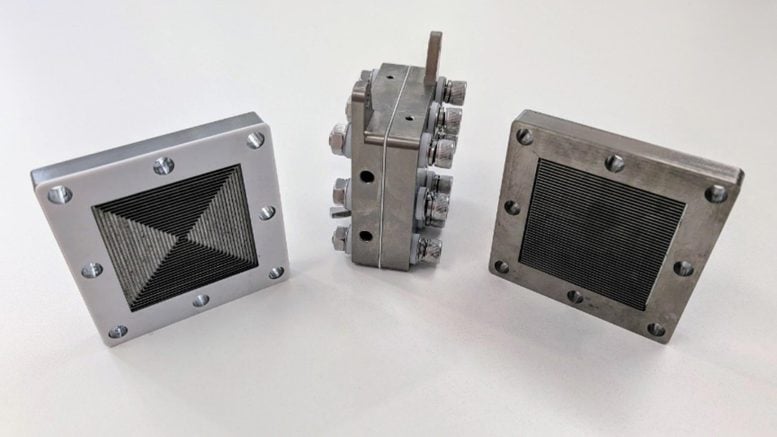
But the star is a membrane-based electrolyzer, a seemingly non-descript silver box, where the conversion to gaseous ammonia happens.
https://www.youtube.com/watch؟v=0cp-l8adfao
ستون پلاسما برای راه اندازی فرآیند آمونیاک سبز استفاده می شود. اعتبار: PJ Cullen/ Plasmaleap
در طی فرآیند هابر ، آمونیاک (NH3) با ترکیب نیتروژن (N2) و هیدروژن (ح2) گازها در دمای بالا و فشار در حضور یک کاتالیزور (ماده ای که واکنش شیمیایی را تسریع می کند).
تیم توسعه یافته استاد پلاسما کالن از برق برای تحریک مولکول های نیتروژن و اکسیژن موجود در هوا استفاده می کند. سپس این تیم این مولکول های هیجان زده را به الکتروار مبتنی بر غشاء منتقل می کند تا مولکول های هیجان زده را به آمونیاک تبدیل کند.
محققان گفتند که این یک مسیر آسان تر برای تولید آمونیاک است.
پروفسور کالن گفت: این اکتشافات مرحله جدیدی از آمونیاک سبز احتمالی را نشان می دهد. این تیم در حال حاضر در تلاش است تا این روش را نسبت به فرآیند Haber-Bosch کارآمدتر و رقابتی تر کند.
“این رویکرد جدید یک فرآیند دو مرحله ای است ، یعنی ترکیبی از پلاسما و الکترولیز. ما قبلاً مؤلفه پلاسما را از نظر بهره وری انرژی و مقیاس پذیری زنده کرده ایم.
پروفسور کالن گفت: “برای ایجاد یک راه حل کامل تر برای آمونیاک پایدار ، ما باید راندمان انرژی مؤلفه الکترولیزر را تحت فشار قرار دهیم.”
اطلاعات: “تنظیم جای خالی های چند منظوره برای اکسیژن برای تبدیل هوای پلاسما” با تضعیف Xu ، Jiaqian Wang ، Tianqi Zhang ، Jungmi Hong ، Song Qiang ، Zhongkang Han و Patrick Cullen ، 22 آوریل ، 2025. نسخه بین المللی Angewandte Chemieحرف
doi: 10.1002/anie.202508240
هرگز موفقیت را از دست ندهید: به خبرنامه Scitechdaily بپیوندید.